
Compare the material your fence actually needs
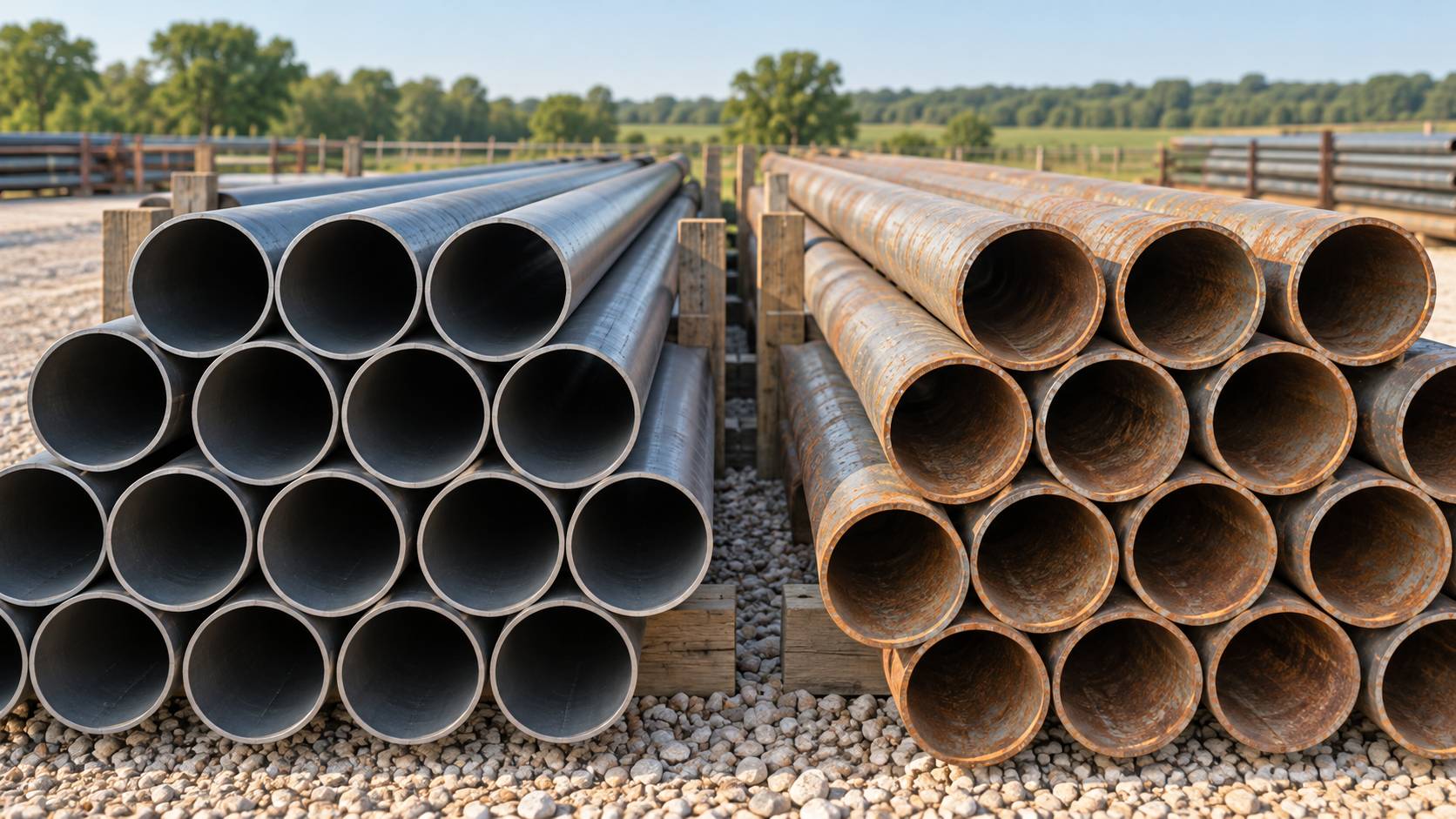
New and used pipe can both enter the conversation when you are planning a fence. The useful comparison starts with the size, condition, and quantity your project needs, then considers what it will take to turn the material into a finished fence. A lower purchase price can be attractive. It becomes less attractive if the pipe needs extensive sorting, cleaning, or cutting before you can use it.
Write down more than the pipe size
Bring the outside diameter, wall thickness, required length, and quantity when those specifications are available. Pipe is sometimes described by a nominal size that differs from its measured outside diameter, so confirm what the seller means. If you are matching an existing fence, take clear photos and measurements. Saying that you need pipe like the old fence leaves room for a mismatch.
Ask what new used and surplus mean for that lot
Those labels describe different things. New pipe may offer more consistent condition, but you should still confirm its specification, dimensions, and finish. Surplus describes how material is being sold; it does not by itself establish its grade or suitability. For used pipe, ask about its previous service and any known coatings or residues. Unknown service history deserves attention before fabrication, particularly when cutting or welding is planned.
Inspect condition and usable length
Look for bends, flattened sections, deep pitting, damaged ends, and other defects that could reduce usable material. Surface rust alone does not tell you how much sound wall remains. Appearance should not replace a suitable condition assessment. Also check the length you can actually use after damaged ends or unsuitable sections are removed. A longer stick is only an advantage when enough of it fits your cutting plan.
Include preparation in your comparison
Ask yourself who will sort the material, remove unsuitable sections, prepare the surface, and handle the scrap. Those tasks take time, tools, and space. If someone else is building the fence, ask whether the material you are considering changes their labor estimate. For gates, corners, and other demanding parts of the fence, use the specifications provided by your builder or designer. This buying checklist does not determine post size or spacing.
Buy against a material list
Separate the list into posts, rails, gates, and other components. Record the quantity and length required for each, and identify where matching appearance or documented specifications matter. Then compare available lots against that list. The best purchase is the material that meets the project requirements at a sensible total cost, including preparation and waste. Confirm current stock before planning your pickup. Bring your fence material list to The Railroad Yard or call 405-377-8763 to ask about current pipe options, dimensions, and availability.
Questions about your material list? Pipe and Steel | Contact The Railroad Yard