
Shipping containers are strong, but that doesn’t mean they are suited for burial. Here’s why understanding how steel structures carry loads matters.
An underground room made from a shipping container sounds like a practical project. Buy a used container, dig into a hillside, install some doors, cover it with earth, and finish the entrance with stonework. The result might look like a cozy underground cabin, a root cellar, or even a modern-day Hobbit house.
But there’s an important question worth asking before the first shovel hits the dirt: Can a shipping container support the weight and pressure of being underground? It depends on how the container is reinforced and how the surrounding soil is managed.
Before and after: What soil pressure can do
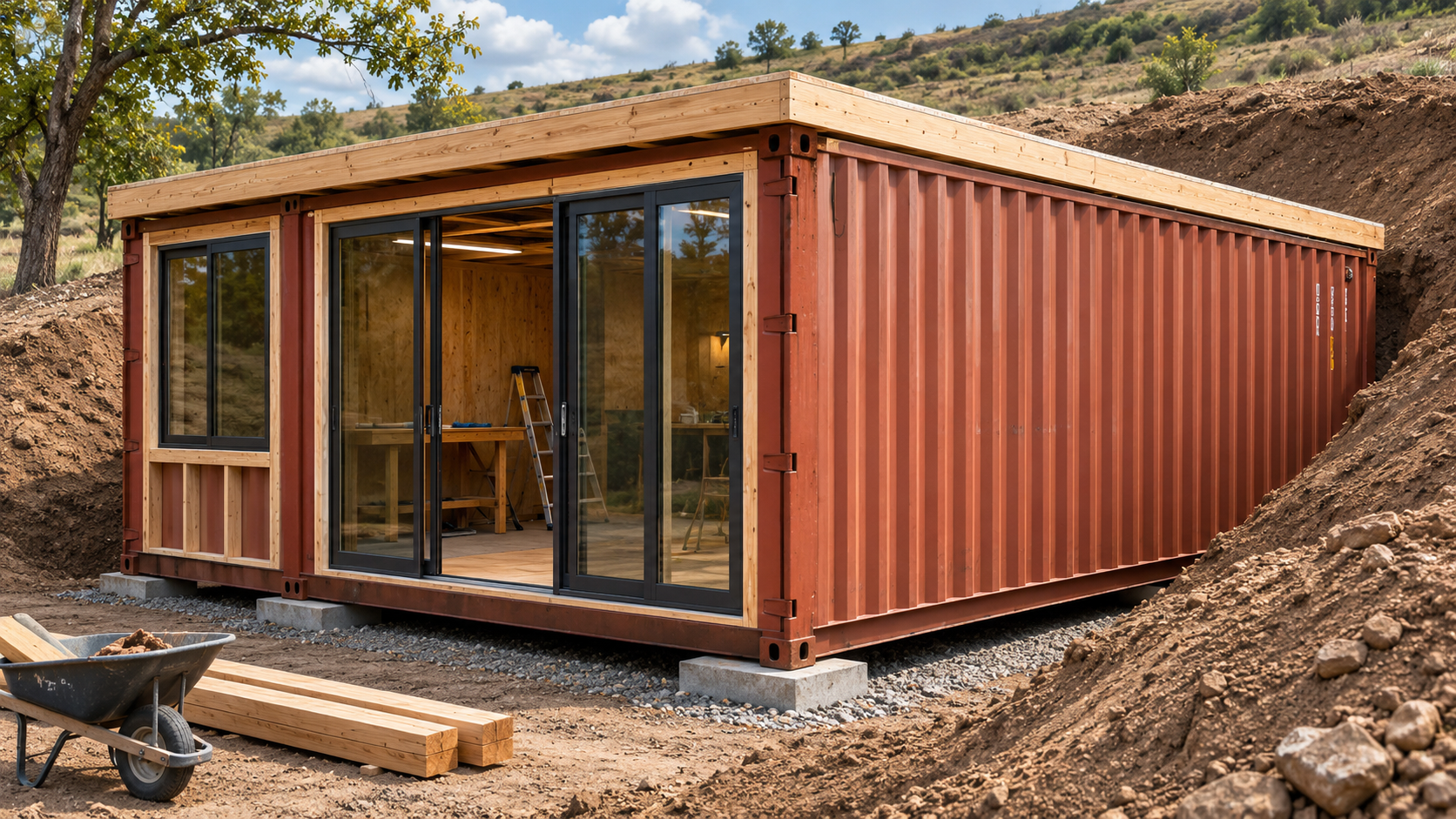
Before: A container conversion with straight walls, prior to soil being placed against the structure.
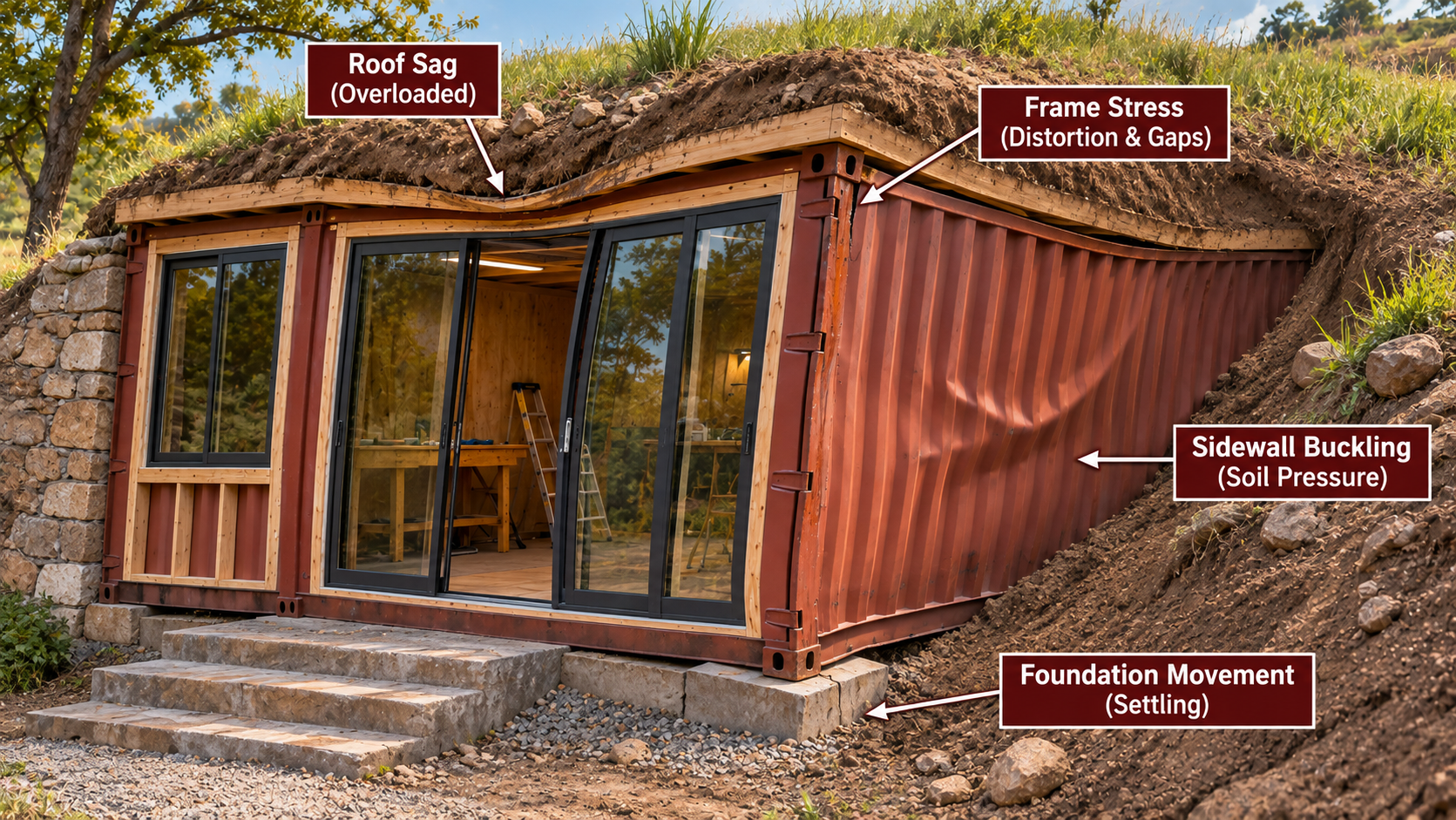
After: An illustrative example of possible structural damage from unsupported earth loads. These are conceptual images, not photographs documenting an actual collapse.
Where Shipping Containers Get Their Strength
Shipping containers are engineered to survive years of transportation, handling, and stacking. When properly loaded and supported, they can carry tremendous weight. But much of their stacking strength comes from their corner posts and structural frame.
When containers are stacked, loads transfer through corner fittings and posts. The thin corrugated walls and roof serve different structural purposes. Burying a container changes the forces acting on it: instead of loads going through its frame, the container can face pressure across its entire roof and walls.
The Hidden Danger: Pressure From the Earth
When a container is buried, surrounding soil pushes inward against its walls. Generally, the deeper the soil, the greater the pressure can become. Rain and groundwater can make matters worse, particularly if drainage is inadequate.
- Sidewalls bowing inward
- Roof panels sagging or buckling
- Movement or distortion around doors and windows
- Corrosion from prolonged moisture exposure
- Structural failure under excessive loading
A container that performs perfectly well above ground may not perform safely when buried.
What About Putting Dirt on the Roof?
A layer of soil might not look particularly heavy, but the weight adds up quickly. Consider a hypothetical 40-foot by 8-foot roof. With 12 inches of soil covering the entire surface, and an assumed soil weight of 100 pounds per cubic foot, that roof would be carrying approximately 32,000 pounds of soil, or roughly 16 tons.
That’s before accounting for additional loads, varying soil conditions, or people and equipment above the structure. A standard shipping container roof is not designed to support that kind of uniformly distributed earth load without an appropriately engineered support system.
Cutting Openings Changes the Structure, Too
Many container conversions involve cutting out walls to install doors, windows, or larger entrances. These modifications can remove portions of the container’s original structural system. Openings may require new steel framing to restore the necessary strength and stiffness.
Simply installing a wooden door frame doesn’t necessarily replace the structural capacity of the steel that was removed. Appropriate reinforcement depends on the container, openings, loads, and overall building design.
Building Underground Requires More Than Strong Steel
Underground buildings can work well when they are designed for the conditions. Properly designed earth-sheltered buildings can offer advantages, including temperature stability, protection from some weather conditions, and creative use of sloping terrain.
An underground project needs a design that accounts for soil loads, groundwater, and the structure’s supports. Depending on the project, that might involve reinforced concrete retaining walls, structural steel framing, engineered roof supports, drainage systems, waterproofing, and properly designed foundations.
A licensed structural engineer should evaluate loads and site conditions before construction. An ordinary underground room is not automatically a certified storm shelter or safe room.
The Right Steel for the Right Job
Steel is an incredibly versatile building material. From structural beams and tubing to plate and fabricated components, it can be used to create strong, long-lasting structures. But strength isn’t just about how much steel a structure contains. It’s about using the right material, in the right configuration, to handle the forces involved.
A shipping container might be an excellent solution for above-ground storage or a properly engineered building conversion. That doesn’t automatically make it the right starting point for an underground structure.
Planning a Steel Construction Project?
At The Railroad Yard Pipe & Steel Supply, we help customers find steel products for construction, agricultural, and fabrication projects. Whether you’re planning a workshop, a structural fabrication project, or another steel application, we can help you explore material availability and request pricing.
Disclaimer: This article provides general educational information and is not a substitute for site-specific structural engineering, geotechnical evaluation, building permits, or professional construction advice. Illustrations of structural damage are hypothetical, not documentation of a real failure.