
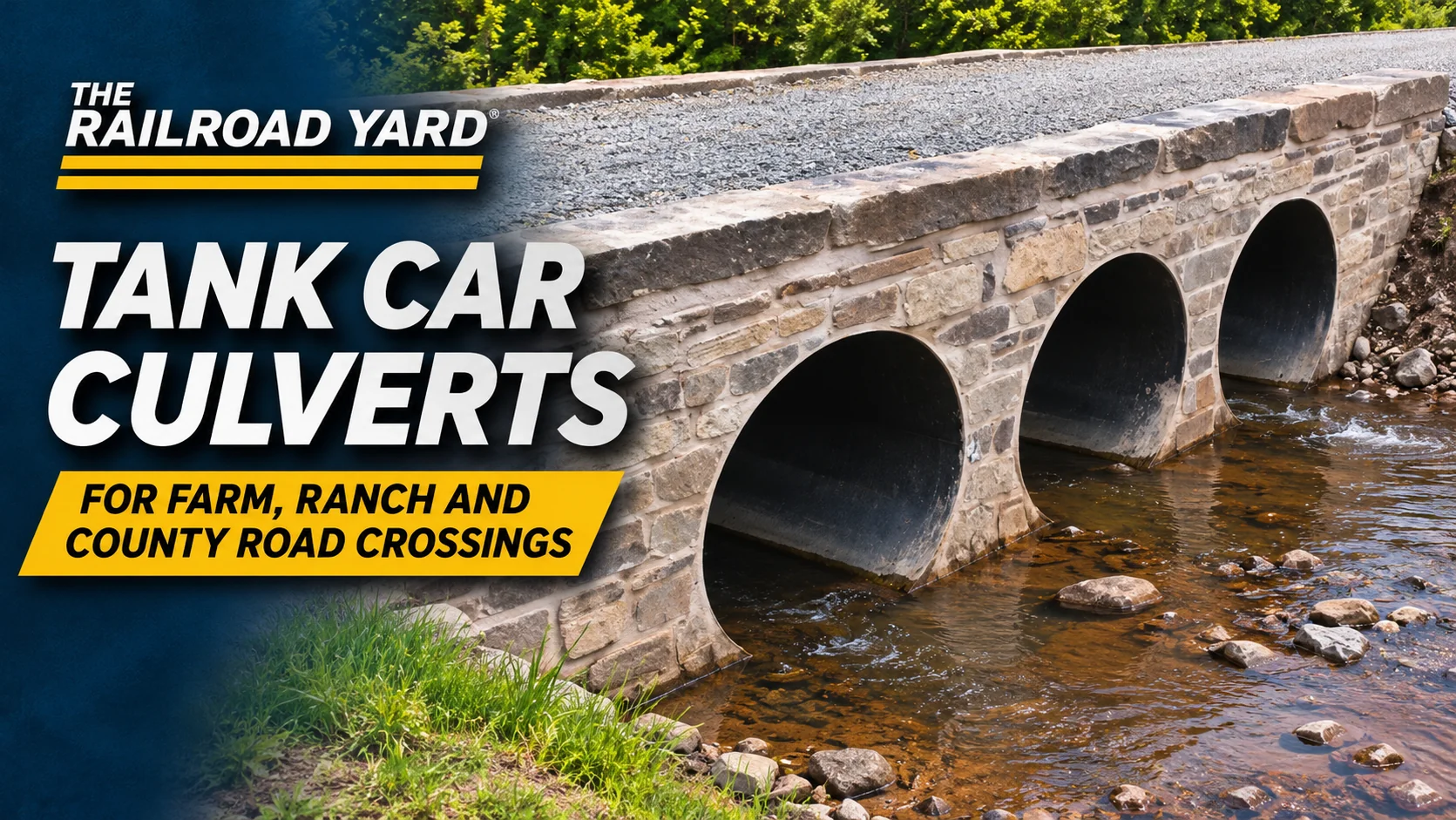
A large creek or drainage ditch can make access difficult long before the rest of a property is ready to use. For some farm lanes, ranch roads, and county crossings, a railroad tank car culvert is one option worth discussing. It repurposes a retired steel tank into a barrel that carries water beneath the roadway.
The question is whether the available culvert fits the crossing. Opening size, condition, installation requirements, and access for delivery all matter.
What a tank car culvert is
A full tank car culvert retains the tank’s round shell, with the ends removed to create an open passage. Preparing it for drainage use also means addressing former fittings and openings. Ask how the specific unit has been prepared and what documentation is available about its condition and previous service.
Not every retired tank is interchangeable. Confirm the diameter, usable length, wall condition, and any repairs or joined sections on the unit being quoted.
Where the full round shape can fit
This type of culvert may suit crossings where a large enclosed waterway can fit beneath the finished road. Farm equipment access, ranch lanes, and rural road drainage are projects where buyers may compare it with other crossing structures.
A large round opening needs enough height between the channel and the roadway, including the cover required by the design. If space is limited, ask the designer whether another shape or a bridge makes more sense.
Size the crossing for the water
Diameter is only part of hydraulic performance. The inlet, barrel length and slope, downstream water level, and debris conditions all affect flow. A smooth steel interior does not mean one culvert will automatically carry a fixed percentage more water than another.
If you’re replacing an existing crossing, explain what happened there. Did water back up, wash around an end, or overtop the road? Share those observations and any plans with the county or drainage professional handling the design. Copying the old pipe can mean copying the old problem.
Treat installation as part of the purchase
The steel barrel is only one component of a finished crossing. Bedding, backfill, compaction, cover, and protection at the ends must suit the structure and the site. Thick steel alone does not establish a vehicle load rating or a universal minimum cover depth.
Ask your contractor what preparation is needed and what’s included in the material quote. Identify any headwalls, connections, or erosion protection shown on the plans rather than assuming they come with the barrel.
Plan delivery before the truck arrives
Share the job location and the route into the property. Photos of gates, tight turns, steep approaches, and the unloading area help identify problems early. Confirm the unit’s dimensions and weight, the delivery scope, and who provides unloading and placement equipment.
A material price is easier to evaluate when freight, site work, installation, and additional fabricated pieces are considered too.
Gather these details for your quote
- Project location and whether the crossing is a private lane or public road
- Site photos and any history of flooding, erosion, or debris
- Required diameter, length, quantity, and approved specifications
- Expected vehicles and proposed road elevation or cover information
- Required end treatments, connections, or other fabricated components
- Access conditions, delivery questions, and target timing
If the design is still being developed, tell us which details are preliminary. That gives the discussion a useful starting point without treating an early price as approval of the crossing.
Planning a large drainage crossing? Call The Railroad Yard at 405-377-8763 or request a Tank Car Culvert quote. Include your location, site photos, and any project specifications so we can discuss material options and pricing.